Title: EVOLUTION MEETS DIFFUSION: Yet Another Generative Model-based Large-scale Dynamic Multiobjective Optimization
Speaker: Gary G. Yen, Sichuan University
Biography: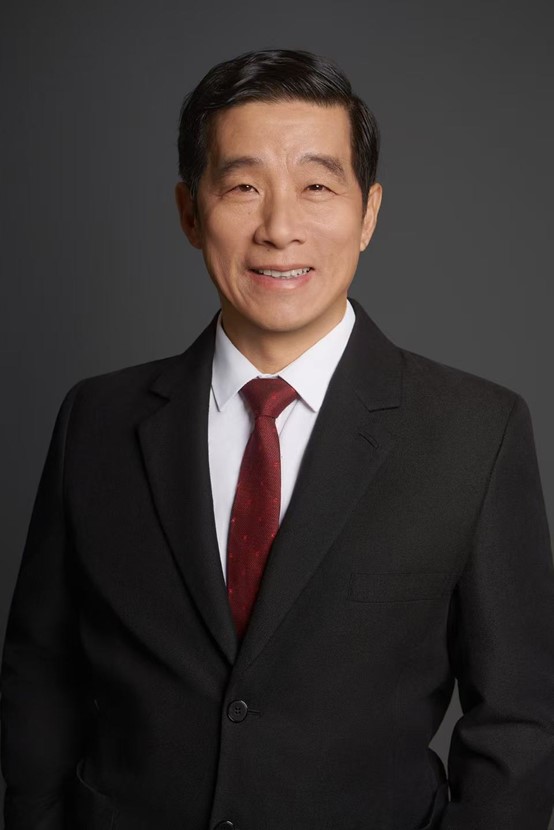
Gary G. Yen received his Ph.D. degree in electrical and computer engineering from the University of Notre Dame in 1992. He was a Regents Professor in the School of Electrical and Computer Engineering, Oklahoma State University. He recently joined Sichuan University, College of Computer Science as a Chair Professor. His research interest includes intelligent control, computational intelligence, evolutionary multiobjective optimization, conditional health monitoring, signal processing and their industrial/defense applications.
Gary was an associate editor of the IEEE Transactions on Neural Networks, IEEE Transactions on Evolutionary Computation, IEEE Transactions on Emerging Topics on Computational Intelligence, and IEEE Control Systems Magazine during 1994-1999, and of the IEEE Transactions on Control Systems Technology, IEEE Transactions on Systems, Man and Cybernetics (Parts A and B) and IFAC Journal on Automatica and Mechatronics during 2000-2010. He is currently serving as an associate editor for the IEEE Transactions on Cybernetics and IEEE Transactions on Artificial Intelligence. Gary served as Vice President for the Technical Activities, IEEE Computational Intelligence Society in 2004-2005 and was the founding editor-in-chief of the IEEE Computational Intelligence Magazine, 2006-2009. He was elected to serve as the President of the IEEE Computational Intelligence Society in 2010-2011 and is elected as a Distinguished Lecturer for the term 2012-2014, 2016-2018, 2021-2023, and 2025-2027. He received Regents Distinguished Research Award from OSU in 2009, 2011 Andrew P Sage Best Transactions Paper award from IEEE Systems, Man and Cybernetics Society, 2013 Meritorious Service award from IEEE Computational Intelligence Society and 2014 Lockheed Martin Aeronautics Excellence Teaching award. He is a Fellow of IEEE, IET and IAPR.
Title: AI for Drug Target Prediction and Molecular Design
Speaker: Min Li, Central South University
Biography: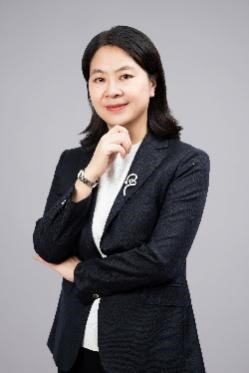
Min Li, Ph.D., is a Professor and the Dean of the School of Computer Science and Engineering at Central South University, China. Earned a Ph.D. in Computer Science from Central South University in 2008. Research interests include genome assembly and 3D structure analysis, single-cell sequencing data analysis, proteomics data analysis, AI-driven drug development, and disease-related prediction. Published over 100 technical papers in refereed journals such as Nature Communications, Genome Research, Genome Biology, Bioinformatics, IEEE/ACM Transactions on Computational Biology and Bioinformatics, and conference proceedings such as IJCAI, BIBM, GIW and ISBRA. According to Google Scholar, publications have received over 16,600 citations, with an H-index of 66.
Dr. Min Li is a member of IEEE, a member of ACM, and a member of CCF. Editorial board member of Big Data Mining and Analytics, International Journal of Data Mining and Bioinformatics, and Interdisciplinary Sciences: Computational Life Sciences. Served as Program Committee Chair for APBC 2023, ISBRA 2021, 2019, 2017, and ICPCSEE 2017. Recipient of the 19th China Young Women Scientists Award in 2024.
Title: DNA Computation for Disease Diagnosis
Speaker: Da Han, Hangzhou Institute of Medicine, Chinese Academy of Sciences
Biography:
Dr. Han Da is a Professor at the Hangzhou Institute of Medicine, Chinese Academy of Sciences. He received his B.S. degree from Xiamen University in 2009 and his Ph.D. from the University of Florida, USA, in 2013. From 2014 to 2018, he worked as a Research and Development Scientist at Intel Corporation in the United States. He is a recipient of the National Science Fund for Distinguished Young Scholars and serves as the Principal Investigator of the National Key R&D Program of China in the field of Synthetic Biology. Dr. Han was selected for the Youth Program of the National High-Level Talent Introduction Project. He has been honored with the Young Chemist Award from the Chinese Chemical Society and the Rising Star Award in Chemistry from the Chinese Chemical Society.
Dr. Han’s research focuses on nucleic acid chemistry and molecular diagnostics. He develops intelligent nucleic acid tools to address challenging problems in cell analysis and disease diagnosis. His primary interest lies in the early detection and screening of malignant tumors. By integrating artificial intelligence with molecular engineering, he has developed liquid biopsy marker panels and detection technologies that enable precise diagnosis of early-stage lung cancer, pancreatic cancer, and other malignant tumors.
Title:Biomarker mining for predicting toxicity responses to cancer immunotherapy
Speaker: Qingchen Zhang, Hainan University
Biography: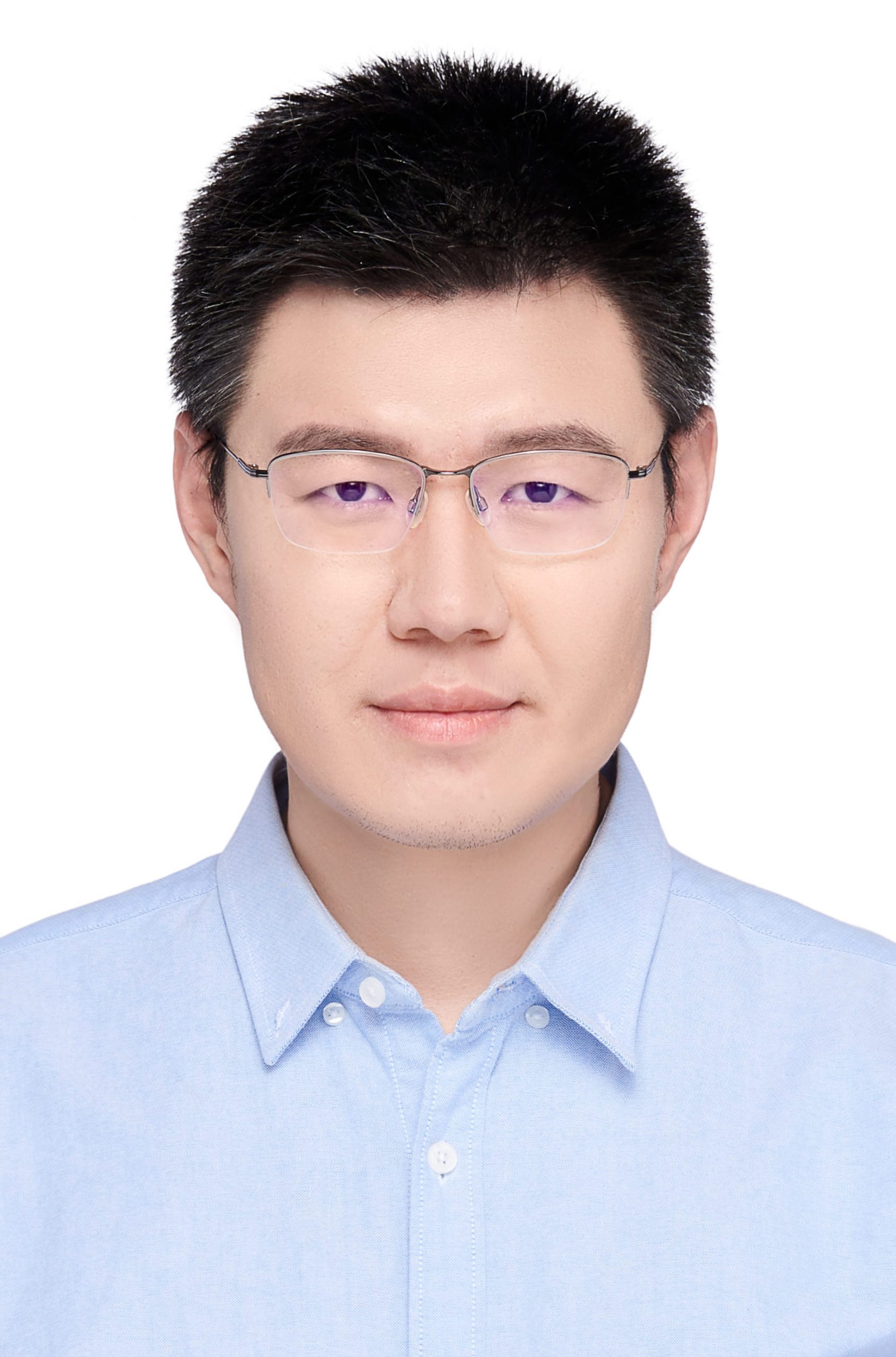
Dr. Zhang is currently a full professor at School of Computer Science and Technology in Hainan University, China. His research interests include bioinformatics and smart medicine. He has published more than 50 papers in IEEE Transactions on Computers, IEEE Transactions on Services Computing and the International Joint Conference on Artificial Intelligence. He obtained the most influential paper award in IEEE TCCPS and IEEE SCSTC. He served as one of program chairs for some international academic conferences such as IEEE SmartWorld and IEEE Cybermatics.